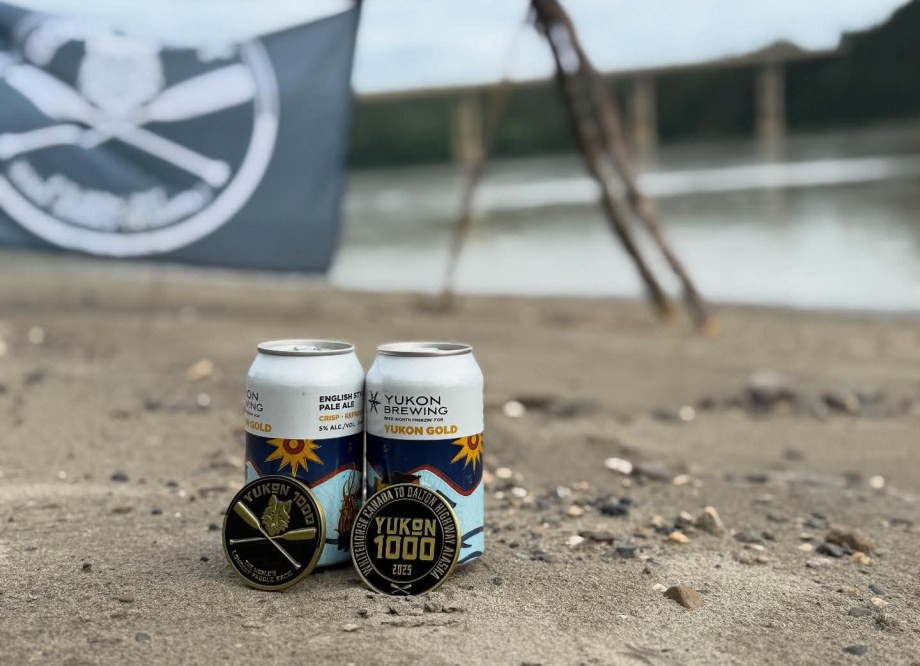
Long Point – Dalton Bridge
| Start Time: | 17/07/2025 05:38:33 |
| Location: | 66°6’36.0720″N 148°38’49.9200″W |
| Rest Time: | 05:58:45 |
We were sitting in the boat, ready to go, when our timer ran down to 6 hours. It was one of the few times we’d adhered to the minimum 6-hour stoppage. Having spent the night in damp sleeping bags, in my case with a stuff sack full of spare clothes as a pillow, there’d been no enthusiasm for sleeping in.
After 7 days averaging 200 kilometres a day, we only had 77 km to go. There would be no need to pace ourselves to the finish. We’ve raced events in the past where 77km was a day-stage. We know how to pace ourselves for that distance.
The team we’d seen last night, camped diagonally across the river from us to the north west, was already gone when we emerged from our tent. They’d stopped before we arrived the night before and had now left before us this morning. We probably wouldn’t see them until the finish.
The fact that they’d camped across the river did give us some hope. If they were following the outside of the bend and continued to do that, it was possible they’d miss the washout that was just a few kilometres ahead.
The next 10 kilometres are home to the three remaining opportunities to screw up your navigation before the river converges into a single channel and stays that way for the last 42 kilometres from Stevens Village to Dalton Bridge.
The first was a channel on our immediate left which looks like a positive shortcut, but rejoins the main channel downstream of a better shortcut. If you take the first, you miss the second. If you miss the second, you’re condemned to an extra 10 km around the aptly named Long Point.
We’d taken that long way around Long Point in 2024. Not because of a navigation failure, but because we’d had doubts about whether the cut was unobstructed. There’d been no detectable flow into the cut, and the washout was fresh from the previous season. There wasn’t a clear view through, so we couldn’t be sure it was navigable.
Other teams in 2024, with better maps1, less reservations, or greater risk tolerance, had taken the cut and saved themselves from an extra hour going around the outside.
In the intervening year, the river had torn a wider path through the cut, and we knew from satellite imagery that it was clear and unobstructed. We could only hope that the teams near us didn’t have up-to-date maps, or failed to recognise the entrance for what it was.
At the current rate of erosion, Long Point will probably be an island by 2026.
Finally, either side of Stevens Village, the last settlement on the river before Dalton Bridge, two archipelagos could delay or misdirect a team that might be low on cognitive power, or batteries in their GPS2. It was day eight, and most teams would be utterly exhausted.
With 77 km to the finish, we knew we could push hard. We expected to reach Dalton some time between 1 and 2 pm. We could confidently throw everything into this last run and damn the consequences. Today there would be hot showers, and tonight clean sheets. At the intended pace, my wrist was good for about 80 km.
With our route well mapped, and knowing that we were lining up for cut through Long Point, we set off with more gusto than we’d applied to the previous seven days. With the sun out, and negligible wind, it would be a worst-case day for our trusty Passat kayak. We’d have to keep moving to avoid being overtaken in the last kilometres by another team in a faster boat.
The cut through Long Point had expanded since 2024, when it was a dubious little creek. The entrance was now a gaping maw that challenged the main channel for size. Fallen trees on either side of the cut no longer threatened to create a blockage. We spotted two well-camouflaged owls sitting atop trees on the riverbank, disinterested in the passing of another kayak.
Taking the cut this year seemed a little symbolic. It was the final demon from 2023 and 2024 that we needed to slay. We’d redeemed ourselves of the withdrawal in 2023 and then resolved our navigation challenges of 2024 when we’d felt overwhelmed by the enormity of The Flats. Severing the head of this demon by cutting through the neck seemed a fitting end.
Stevens Village soon appeared on our right. Only a few of the houses are visible through the trees overlooking the river. I feel sure that the most prominent house is closer to the eroded riverbank than it was in 2024.
Beyond Stevens, we started to count down to Dalton. There are only two more turns3 – a left and a right. The remaining distance, 42km, the length of a marathon, is mostly down to two legs, one 15 km to the south and the last 32 km to the west.
Being from the Southern Hemisphere, I find my internal compass acts up in the higher latitudes of the Arctic North. The position of the sun in the sky makes no sense to my internal sundial, leaving me disconnected from both compass direction and time of day. The weirdest manifestation of this, and I’ve noticed this two years running, is that as we turn south at Stevens Village, it feels like we’re running downhill4.
Paddling this section for the first time in 2024, we recalled Jon’s words from the briefing about how the river gains speed as you enter the final stretch. That is, regretably, unmitigated bollocks.
It’s a grind. Topologically, all of the channels converge into a single flow, which eliminates any slow anabranches. Psychologically, the long traverses from bend to bend across a wider riverbed, separates you from the banks and the relative sense of motion. It feels like you’re going nowhere, slowly.
Crispin and his partner Carmen consumed an entire bag of jellybeans on the last leg in 2023, trying to keep their spirits up.
With 32 km to run after the last right turn, the river takes on lake-like proportions. When Kate and I talk about it, we refer to it as the lake. The hills have been rising on either side since the start of the run south, and now you’re in a wide valley. The current vanishes. The best you can hope for is no headwind.
We’d been reduced to a slow 8 kph for the last leg in 2024. We’d searched the river for any current and had found nothing.
This year I was finding little fractures and fissures on the surface of the water and we were manging to coax nearly 12 kph out of the boat despite being at the wrong end of seven cold, wet, windy days, and wrist problems that were still dogging both of us. The lack of wind leaving the surface undisturbed and the sun beaming down through a clear sky were probably helping. In 2024, we’d been bashing into a mild headwind and the surface had been too rippled to see where the current was running.
Kate by this stage was having wrist problems and we were pausing every 30 minutes to coast so she could have some relief. Normally we stop every hour for food and fluids, but with the discomfort associated with picking up the paddle and pulling the boat up to speed from a standstill, we were both glad we were counting down to the final pause. We skipped the last fuel stop 45 minutes out from the finish. There’s nothing you can eat in the last 45 minutes that’s going to be digested in time to make a difference.
It takes forever to see the bridge. The river bends slightly to the left, and the hill on the apex blocks your view until you’re 9-10 km out. The last 10km takes an age, even when you’re paddling hard.
For the entire length of the lake, I’d been singing 99 bottles of beer in my head, using the rhythm to maintain my cadence. To keep my mind off the grind, I was watching the numbers on my GPS, busily calculating how many bottles were consumed per kilometre, and where I needed to reset to 99 to run out of bottles just as we crossed the line. This is PhD-level mathematics for somebody coming to the end of a 1,000-mile race.
Having satisfied myself that we were consuming 465 bottles per kilometre, which took several goes because I kept losing count around 77, I moved on to the next re-entry calculation – how many kilometres to the finish?
Applying my bottles per kilometre rate, which I promptly forgot, I distracted myself by working out how close to our plan we would be when we hit Dalton. The sheet of waypoints taped to my deck said we had to travel 1485 kilometres to reach Dalton.
We crossed the line with 14826 on the clock. Coming in three kilometres under was a bit of a surprise. We were sure we’d added 3-4 km on day 7 after missing a turn and getting swept into the outer flats.
Time, other than improving on last year, had been a secondary consideration. We’d improved by 7 hours.
Nobody had passed us on the last day, and we hadn’t seen another boat all day, let alone had the opportunity to overtake.
We finished 7th7, in a time of 7 days, 4 hours, 41 minutes.
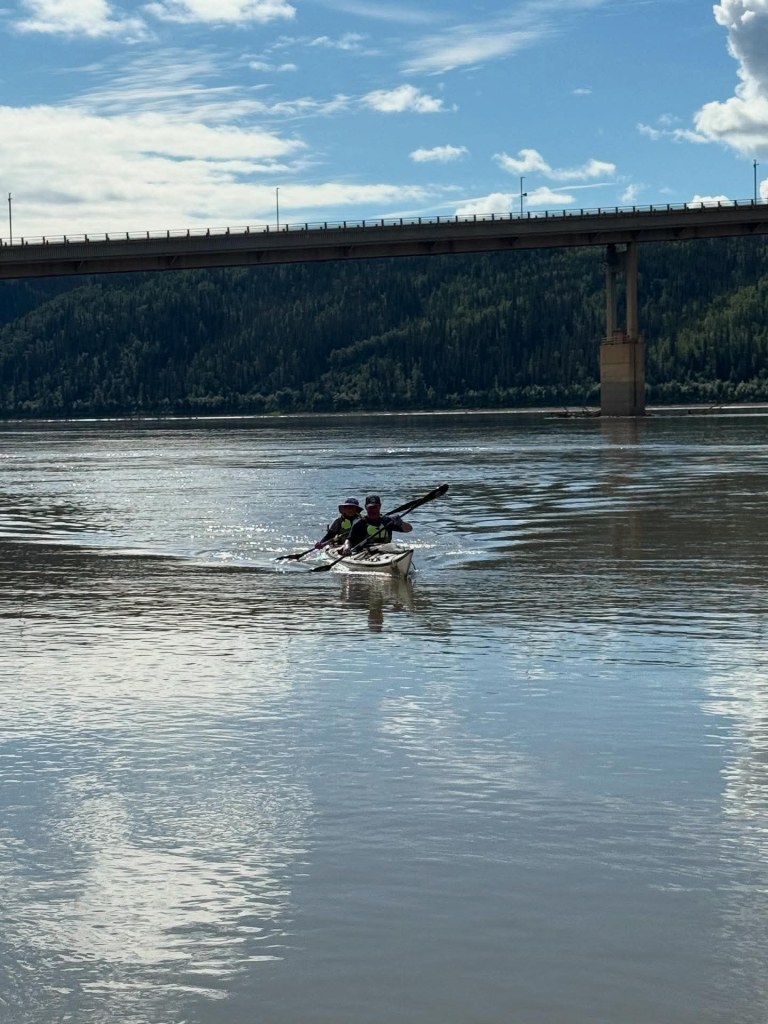
Crossing the line in 2024, we’d been in good shape and self-assessed that we could have fairly comfortably continued on for another 1000 miles to the sea. At the time, there had been an active discussion running about a Yukon 2000 race – from Whitehorse to the Berring Sea.
This year, we were damaged. The cold and the wind, combined with low water and a faster time, had knocked us around physically. We both had inflamed wrists, which would largely resolve when we stopped paddling. The do-or-die pace of the last day had been sustainable for not much longer than we’d needed to sustain it. My flanks were fairly badly abraded, but thankfully, I’d avoided any further complications from infection.8
Jon was waiting for us on the beach with a cold beer for me and a can of something for Kate, who doesn’t drink beer. He had his phone up, ready to record our raw responses.
We both talked about the cold and continuous rain as lows for the race, especially for those who were travelling light. Kate’s positive note was having a better plan for The Flats. Mine was the way we work together as a team to solve problems, each filling in the other’s gaps.
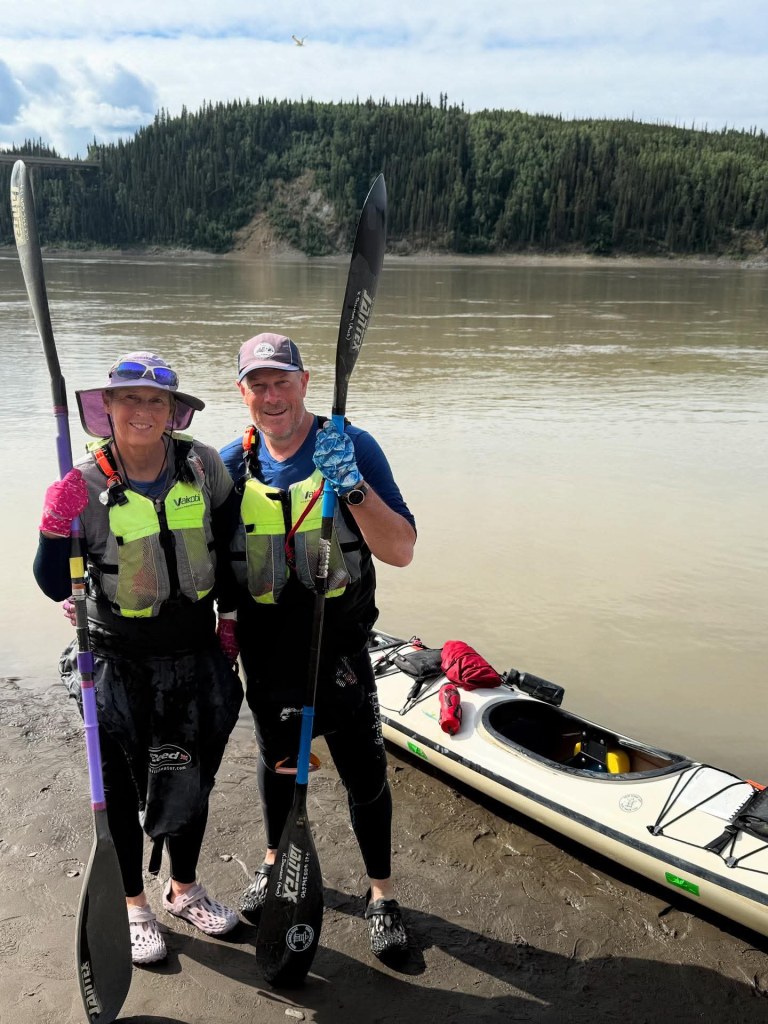
I can clearly be heard at the end of the clip saying we looked forward to watching the race from home in 2026.
Things we got right: I’ve highlighted a number of these in previous posts, but four things really stood out as making a difference in 2025.
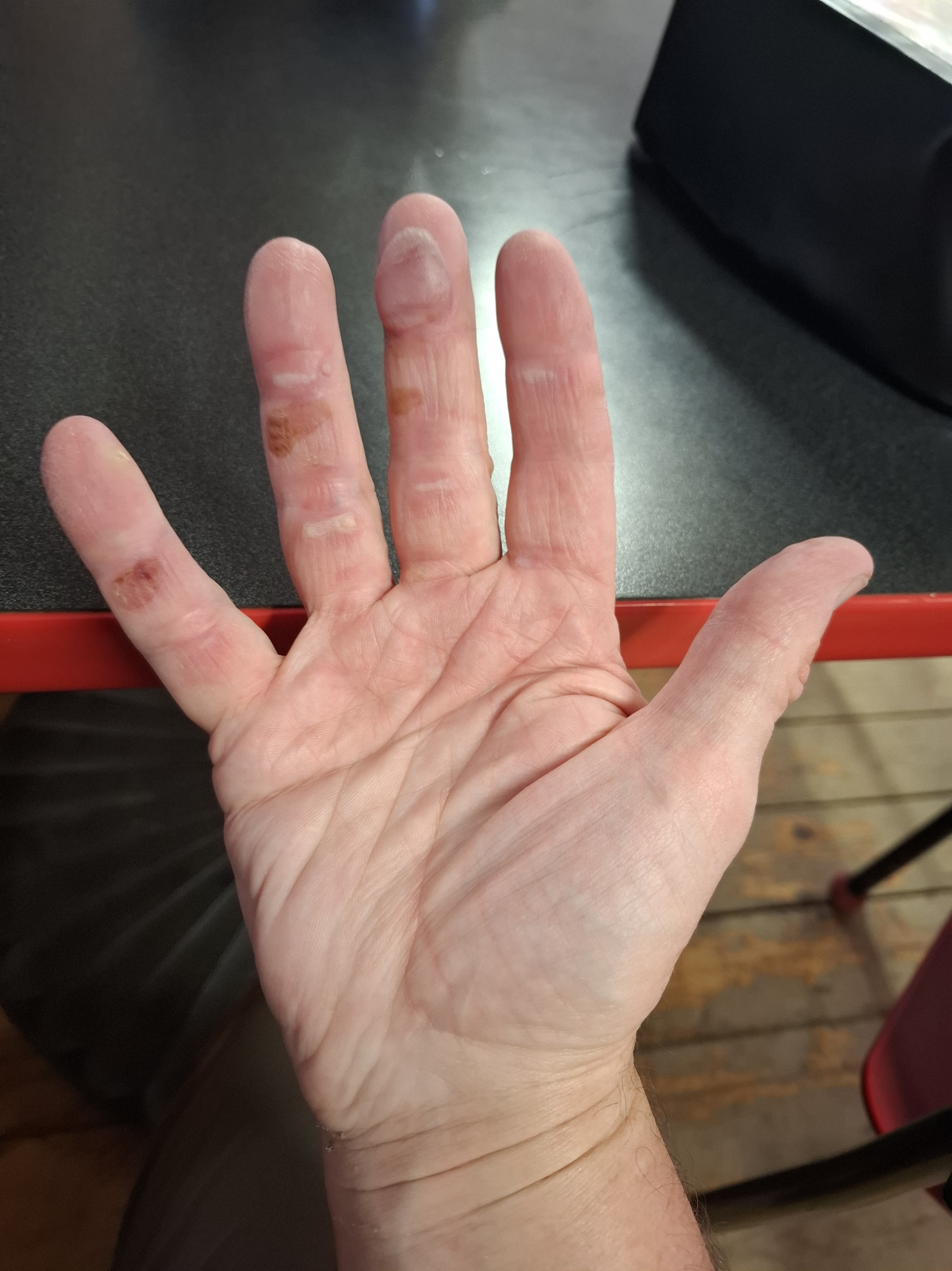
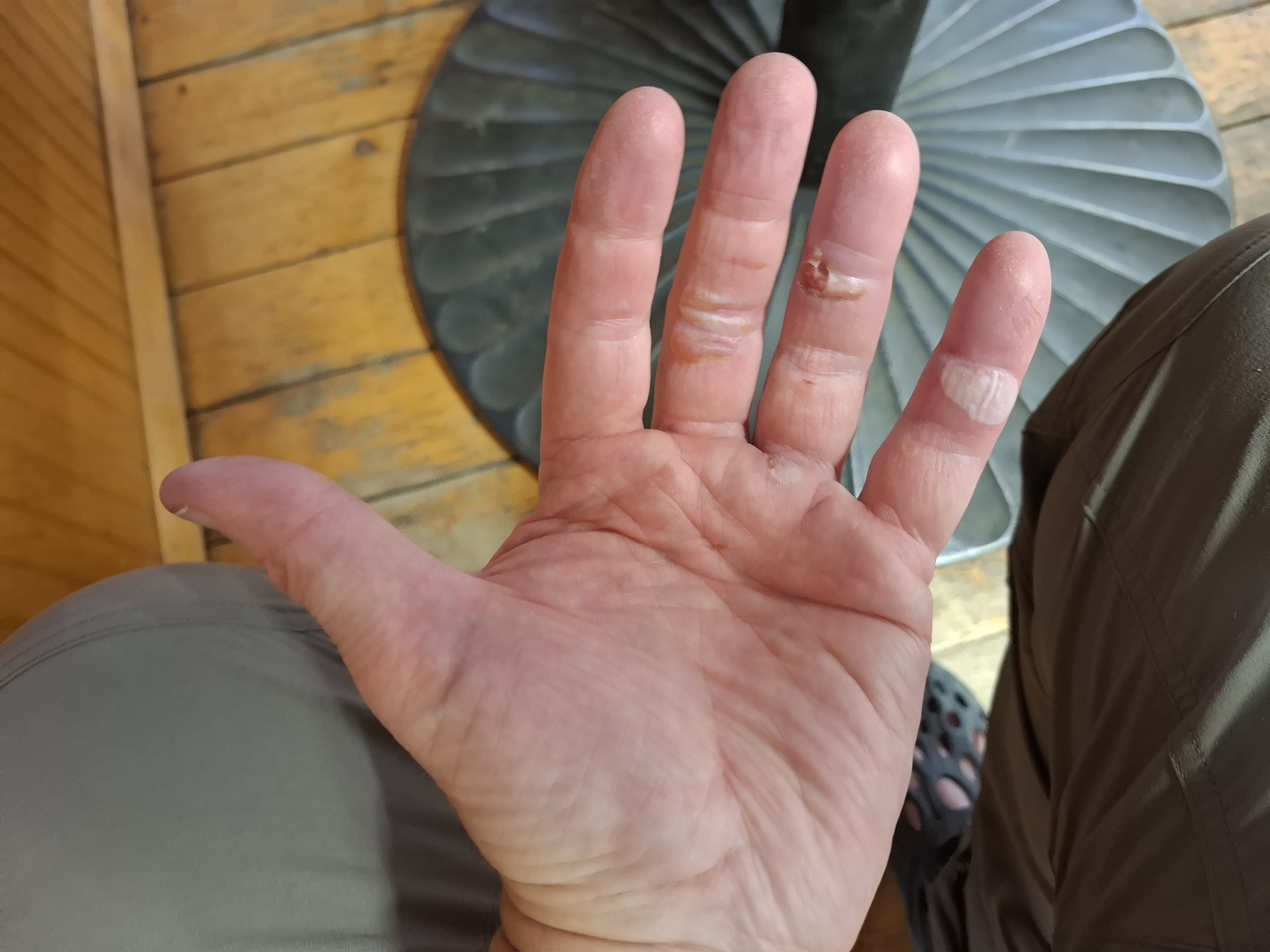
- Cohesive tape: I bought a new blister management approach for 2025. Cohesive tape is an elastic tape that only sticks to itself. It doesn’t stick to skin, hair or anything else. You can apply it to wet hands and it works well to reduce friction and protect hot spots. I would put it on the load-bearing joints of my fingers in the morning and take it off completely at night, which allowed my hands to dry out.
- Sun Gloves: In 2024 we both ended up with blistering across the backs of our hands from sun exposure. We found some lightweight fingerless lycra gloves that were thin enough on the backs to remain relatively dry and on the palms to not interfere with our grip on the paddle. I think they also contributed to fewer blisters.
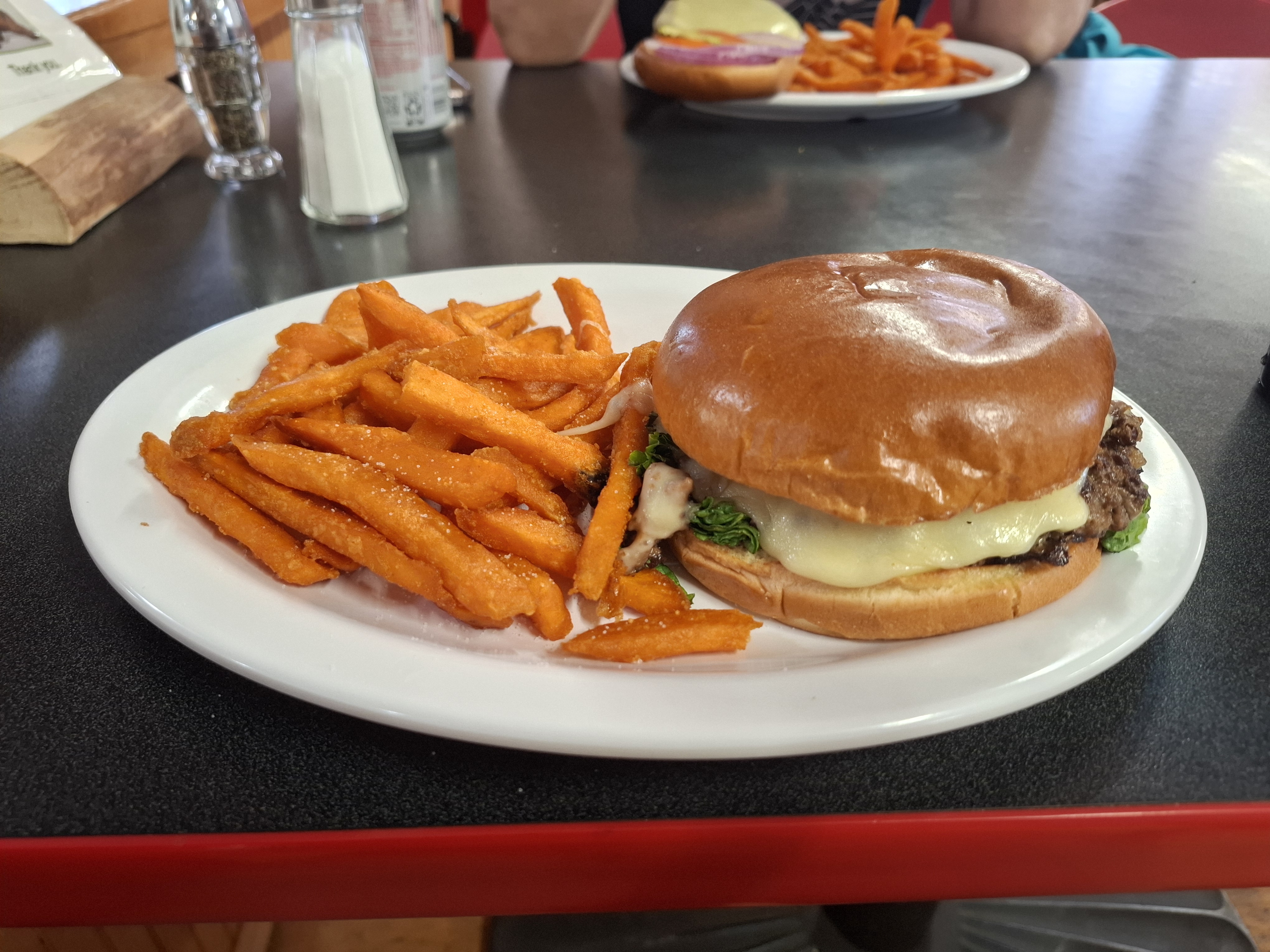
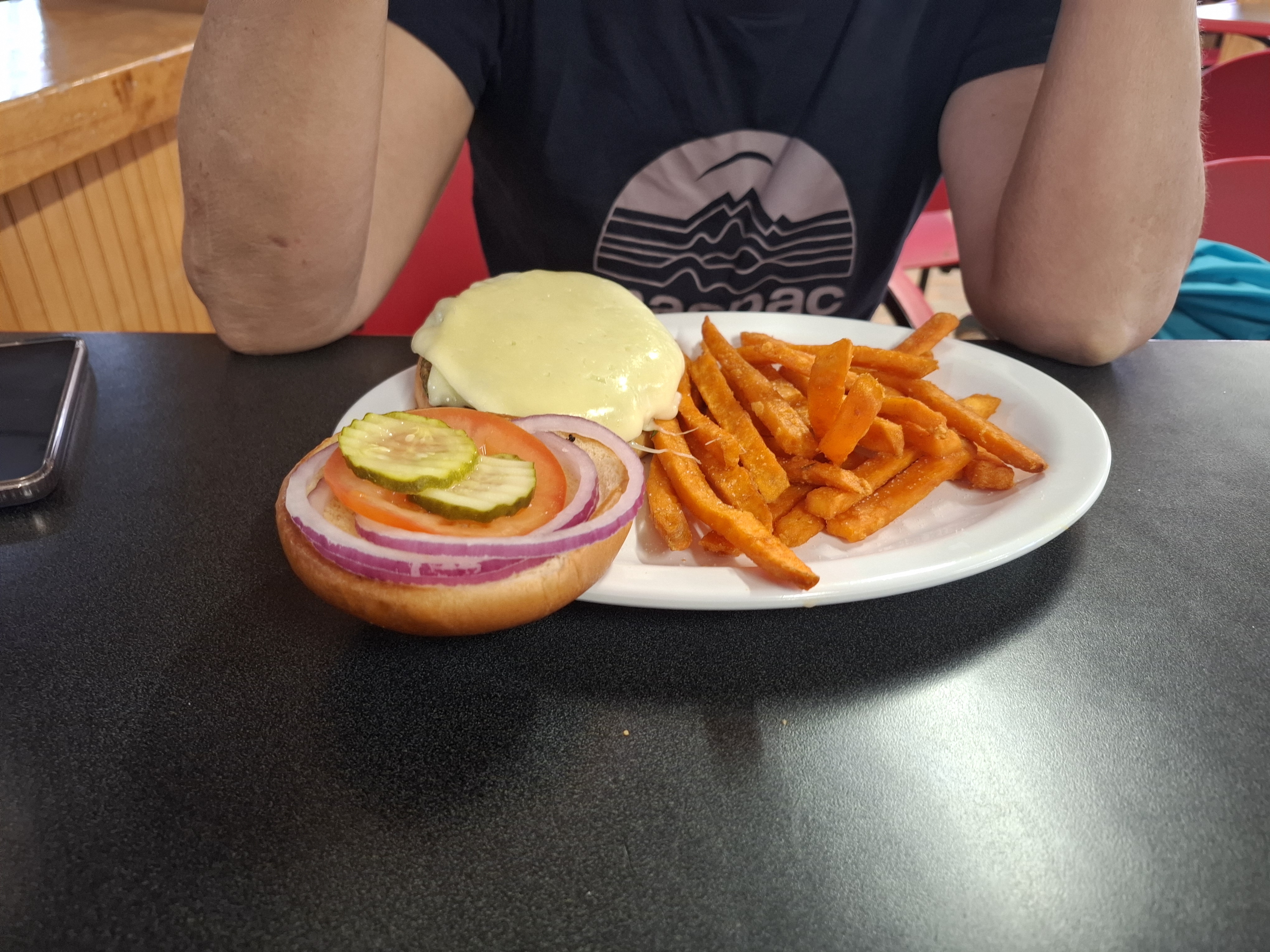
- Cold Food: We dropped all food that required cooking or heating this year. That saved us time at the start and end of our stops, giving us more sleep. We both really appreciated the burgers at Dalton River Camp9
- Antiseptic Powder: This was probably developed during the Korean war, but it was a revelation to me. It worked really well on the abrasions I had on my torso. Painless to apply, you can still stick a bandage over the top, and effective.
Things we could do better: In the interview process, Jon asks hopeful competitors what areas they need to improve on and how they plan to do it. After three starts and 2 finishes, we’re confident we have the core competencies to complete the race and deal with the variations that are likely. There are still things that we could improve to make ourselves faster.
- GPS mounts: We still haven’t found the perfect answer to mounting a GPS on the deck in a way that a) keeps it out of the paddle stroke, b) doesn’t get in the way when you’re in the cockpit, and c) is positioned so the screen can be read when the sun is low in the sky.
- Navigation: I think there’s room for improvement reconnaissance of the last braided river section from Fort Yukon to Stevens Village.
- Reading the current: In Tasmania, we train on a tidal estuarine river. It has features similar to Lake Laberge in one part and the approach to Fort Yukon in another. What it lacks is a river-like current. Our ability to pick faster water could be improved.
Epilogue: We arrived at the finish line in Dalton early enough to catch the shuttle to Fairbanks that afternoon. We spread our gear out on the ground to dry, went into the roadhouse for a shower, and a meal which was also very good. We used the wifi in the roadhouse to update our reservations for Fairbanks. Two or three other teams that arrived after us were also on the shuttle, with a little more rushing and stumbling, and notably less showering. By 8:30pm we were standing in the Walmart car park10 waiting for an Uber to our hotel.
We were back to the normal world.
In Fairbanks, I recommend Salty’s on 2nd for breakfast, The Fairbanks Distilling Company for a cocktail (I’d paddle 1000 miles for a case of their Kate’s Showgirl Gin if anybody wants to sponsor us), and Bahn Tai for an excellent evening meal.
| End Time | 17/07/2025 12:13:26 |
| End Location: | 65°52’45.5520″N 149°43’27.6240″W |
| Altitude: | 79.0 m |
| Distance: | 77.3 km |
| Paddling Time: | 06:36:04 |
| Non-moving time: | 00:00:30 |
| Average Speed: | 11.7 kph |
| Max Speed: | 16.0 kph |
| Race Position: | 7th |
Help encourage more posts by buying Steve a coffee…
Choose a small medium or large coffee (Stripe takes 10% and 1% goes to carbon reduction)
Or enter a custom amount
Your contribution is appreciated.
Donate- I’m yet to see a topo map that shows the long point cut is navigable. It is only clear on satelite imagery. ↩︎
- 2024 we blew through our first set of GPS batteries in the first third of the river. With only one set of spares, we rationed batteries for the next 1000km. You really do need to be able to navigate with your maps. ↩︎
- Two significant turns… Up close there are a handful of kinks in the river. The last noteworthy kink prevents you from seeing the bridge until you’re in the last 9-10 km. ↩︎
- Between Stevens and Dalton the river drops 5m (17ft) ↩︎
- I actually have no idea what the number was. It’s somewhere between 42 and 72 verses to the kilometre ↩︎
- Mark & Jules Hamilton from Bristol Train ran 952 miles, we ran 921 miles. ↩︎
- 4th kayak, 3rd mixed team, 2nd mixed kayak, 1st and only Australians across the line or however else you want to position it. ↩︎
- My shoulder, which had given me no trouble during the race seized up in the two weeks we spent travelling home and it stopped me paddling for about three months. Kate couldn’t feel three fingers in her hand for almost four months. ↩︎
- It wasn’t on the menu at Dalton, but they do icecream in a HUGE glass. Better than the burger if I’m being honest. ↩︎
- A couple of quick points for future racers – There is free WiFi at Dalton if you ask, and free WiFi near Walmart. The 3 hours between are a dead zone where all you can do is sleep, swat mosquitoes or talk to Ben about all things Alaskan. Americans don’t speak English. Telling the Uber driver you are waiting in the car park is a mistake. The required term is Parking Lot. ↩︎
 Rivers of Dust and Ash
2 thoughts on “2025 Yukon 1000 – Day 8 – Thursday”